
Sewage backup cleanup in Fort Worth, TX
Sewage backup cleanup in Fort Worth starts with a call to Fort Worth Water at 817-392-4477, option 1, so a crew checks the city main. Once sewage is inside, it is contaminated water: porous materials it touched come out, everything left is cleaned and disinfected, and the rooms are dried.
Your call is connected with an independent local water damage company, chosen by a call network; ask what it handles before work starts. Water category: category 3 (contaminated water).
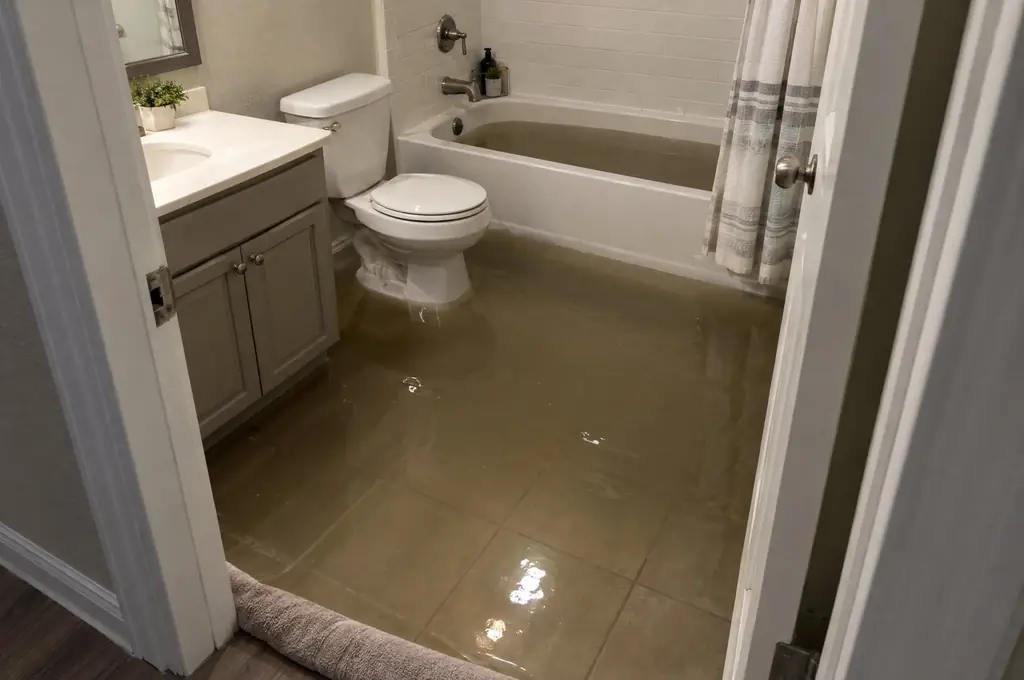
The city's sewer is separate from its storm drains, but it says rain and groundwater leak in through cracks and bad connections, and that extra flow can push sewage back up into homes during heavy rain.
Right now
- 1Stop using sinks, tubs, toilets and the washer.
- 2If sewage is coming up while nothing is running, call Fort Worth Water at 817-392-4477, option 1, any hour.
- 3Keep everyone, especially children and pets, out of the affected rooms.
- 4Don't use a household vacuum or fans on sewage; they spread contamination.
- 5Photograph the affected rooms for your own records before cleanup.
Fort Worth and Texas facts for this problem
Fort Worth Water asks residents with sewage backing up into the house to call 817-392-4477 (option 1, 24 hours) so a crew can check the city main before a plumber is called.
Source: City of Fort Worth: Sewer Frequently Asked Questions.
If the overflow stops once every fixture is turned off, the city says the problem is likely in the private sewer lateral and a plumber is needed.
Source: City of Fort Worth: Sewer Frequently Asked Questions.
A sewer lateral, the pipe from the house to the public main, is privately owned and maintained in Fort Worth.
Source: City of Fort Worth: Sewer Frequently Asked Questions.
The city says groundwater and storm runoff that leak into the sewer through cracks and bad connections can cause sewer backups into homes.
Source: City of Fort Worth: Sewer Frequently Asked Questions.
Fort Worth treats wastewater for 23 customer cities and built a high-rate clarifier in 2004 to handle storm surges at the plant.
Source: City of Fort Worth: Sewer Frequently Asked Questions.
The official record has 121 days since 2000 with 1.70 in. of rain or more, the wettest 1% of days since 1898.
Source: ACIS daily record, official Dallas/Fort Worth climate record, calculated by Fort Worth Water Damage & Mold on November 18, 2026.
If sewage comes up a drain while nobody is using water, Fort Worth Water asks you to call 817-392-4477 (option 1, any hour) so a crew can check the city main. If the overflow stops once you turn every fixture off, the clog is likely in your own sewer lateral, which the owner maintains.
Sources: City of Fort Worth: Sewer Frequently Asked Questions
Related on this site: the Fort Worth flooding record for the heavy rain days that overload sewers, and the printable emergency checklist for the city's 24/7 sewer line.
How the work usually goes
1.Line checked
Fort Worth Water checks the main. If the overflow stops when every fixture is off, the problem is likely your private lateral and a plumber clears it.
You: Note what the city crew tells you about where the clog was.
2.Removal
Sewage is extracted, and carpet, pad and drywall it touched are removed and bagged.
You: Set aside belongings you want to keep for cleaning.
3.Cleaning and disinfection
Hard surfaces, the slab and framing are cleaned and disinfected.
You: Stay out of the area until it's done.
4.Drying
Air movers and dehumidifiers run until readings are back to normal.
You: Keep the doors to the area shut.
5.Repairs
New materials go in after drying, usually under a separate estimate.
You: Keep the city's and the plumber's notes with your records.
How insurance usually treats it
Sewage that comes up through a drain is handled under a policy's water backup wording, which differs from the sudden-leak coverage TDI describes for a burst pipe or a washer hose. Read that section of the policy and the declarations page, which shows any backup coverage that was added.
General information, not insurance advice; the policy itself decides. More on the Fort Worth water damage insurance page.
What changes the size of the job
- How many rooms the sewage reached
- How long it sat before cleanup
- Carpet, pad, drywall and cabinets that must be removed
- Whether the HVAC return or ducts were in the affected area
- Drying days and equipment
No prices on this site. A company measures moisture on site and writes an itemized estimate; the water damage estimator lists what that estimate should include.
Questions people ask about sewage backup
Who is responsible for a sewer backup in Fort Worth?
The city maintains the sewer mains in streets and easements; the service line from the house to the main, called the lateral, is the owner's. Fort Worth Water asks you to call 817-392-4477 first so it can check the main.
Why does sewage back up when it rains?
The city says groundwater and storm runoff can get into the sewer through cracks, bad connections and roof downspouts tied into it. That extra flow can overload the pipes and send sewage back up into homes.
Is a sewage backup safe to clean myself?
Sewage is Category 3 water and can make people sick. Small spills on hard floors are sometimes manageable with protection; anything that soaked carpet or drywall is a job for trained cleanup crews.