
Flood damage restoration in Fort Worth, TX
Flood damage restoration in Fort Worth is cleanup after outside water gets in: storm runoff under a door, through the garage or up from a yard that can't drain. The water counts as contaminated, so wet drywall, insulation and carpet usually come out, everything left is cleaned, and the house is dried.
Your call is connected with an independent local water damage company, chosen by a call network; ask what it handles before work starts. Water category: category 3 (contaminated): outside flood water.
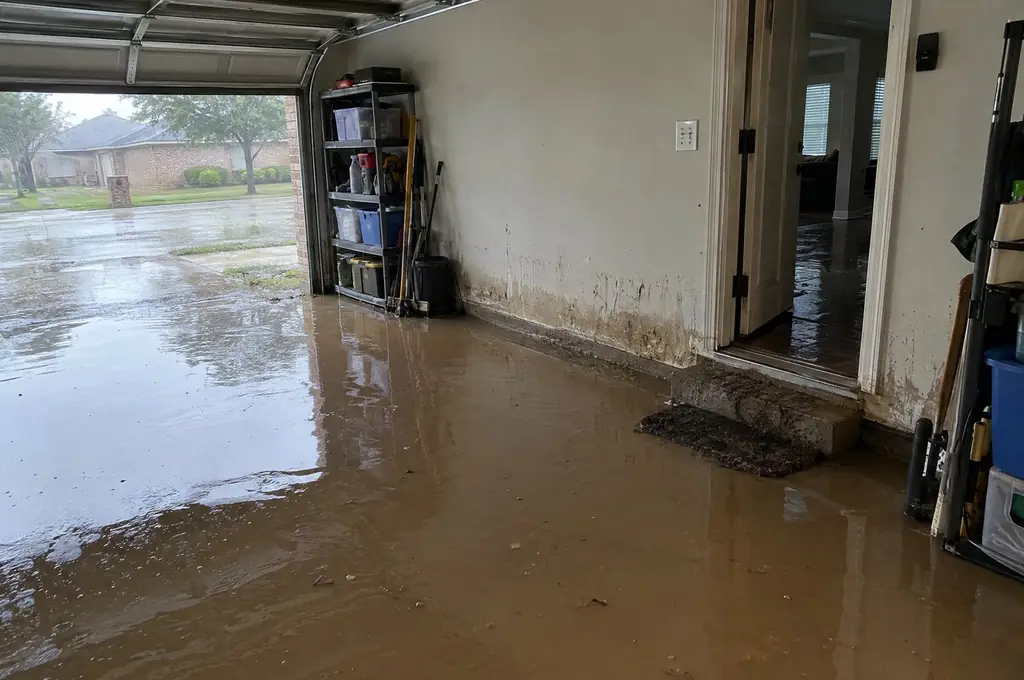
In Fort Worth much of the risk is drainage, not the river. The city says the flooding around Linwood and West 7th comes from undersized storm drains and flat ground, and its Flood Risk Viewer shows areas outside the FEMA map that it has studied.
Right now
- 1Stay out of the water if it could reach outlets or cords, and keep children and pets away from it.
- 2Don't drive through water across a road. The city has roadside flashers that warn drivers of flooding hazards.
- 3Switch off power to flooded rooms only if you can reach the panel without standing in water.
- 4Wear boots and gloves for any contact with flood water, and wash hands afterward.
- 5Take photos of the water line on walls and of damaged things before cleanup, for your own records.
Fort Worth and Texas facts for this problem
The Clear Fork of the Trinity at Fort Worth crested at a record 28.20 feet on May 17, 1949; since 1957 its highest listed crest is 16.8 feet on May 2, 1990.
The city traces flooding around Linwood and West 7th to undersized storm drains and flat ground, not Trinity River overflow, and plans a first-phase drain under University Drive estimated at $42 million.
Fort Worth holds Class 7 in FEMA's Community Rating System, which lowers NFIP flood premiums 15 percent for every resident, inside or outside the floodplain.
Source: FEMA: Community Rating System eligible communities, effective Oct. 1, 2026.
FEMA records 1,382 NFIP flood claims in the 34 Fort Worth ZIP codes on this site, with $19,993,914 paid on buildings and contents.
Source: FEMA OpenFEMA NFIP Redacted Claims v3, calculated by Fort Worth Water Damage & Mold on November 13, 2026.
1990 has the most NFIP claims by year of loss in those ZIPs, 148, followed by 2004 with 126.
Source: FEMA OpenFEMA NFIP Redacted Claims v3, calculated by Fort Worth Water Damage & Mold on November 13, 2026.
DFW Airport took 9.19 inches of rain over Aug. 21 and 22, 2022, the second-largest 24-hour total in the Dallas/Fort Worth record.
Every Fort Worth property owner can buy NFIP flood insurance, inside or outside the mapped floodplain, and the city's Class 7 rating in FEMA's Community Rating System lowers those premiums 15 percent. Standard home policies leave flood out, the city notes.
Sources: FEMA: Community Rating System eligible communities, effective Oct. 1, 2026; City of Fort Worth: Linwood FAQs (Sept. 2026)
Related on this site: the Fort Worth flooding record for the heaviest rain days and crests since 1898, and the flood map by ZIP for NFIP claims and flood policies in each ZIP.
How the work usually goes
1.Water and mud out
Standing water is pumped or extracted and mud is shoveled out before anything else.
You: Make a list of damaged belongings as items come out.
2.Tear-out
Because flood water is contaminated, drywall is usually cut above the water line, and wet insulation and carpet are removed.
You: Ask how high the wall cut will be and why.
3.Cleaning
The slab, framing and remaining surfaces are cleaned and treated before drying.
You: Keep the house closed and the AC running to hold humidity down.
4.Drying
Air movers and dehumidifiers run until framing and the slab read dry.
You: Ask for the daily readings.
5.Rebuild
Drywall, trim and flooring go back once everything tests dry, usually under a separate estimate.
You: Keep every report and receipt together.
How insurance usually treats it
TDI says home policies don't cover floods; that takes a separate flood policy. Every Fort Worth resident can buy NFIP flood insurance, inside or outside the FEMA floodplain, and the city's Class 7 Community Rating System standing lowers NFIP premiums 15 percent.
General information, not insurance advice; the policy itself decides. More on the Fort Worth water damage insurance page.
What changes the size of the job
- The waterline height on the walls, in inches
- How long it sat before cleanup began
- Garage, slab and HVAC equipment affected
- Which drywall, insulation and flooring must be cut out and hauled off
- Contents that need cleaning or removal
No prices on this site. A company measures moisture on site and writes an itemized estimate; the water damage estimator lists what that estimate should include.
Questions people ask about flood damage
Why does West 7th flood when the Trinity isn't high?
The city says the Linwood and West 7th flooding comes from an undersized storm drain system, flat land and runoff from the wider watershed, not from Trinity River overflow. A first phase of drainage work, a large drain under University Drive, is set to start construction in 2029.
Can I get flood insurance if my Fort Worth house isn't in a flood zone?
Yes. The city says NFIP flood insurance is open to all Fort Worth residents, inside or outside the FEMA floodplain, and its Class 7 Community Rating System standing lowers premiums 15 percent.
Where can I check my address for flood risk?
The City of Fort Worth's Flood Risk Viewer and its OneAddress tool show whether a property is in a regulatory floodplain or in an area the city has found to be flood prone. FEMA's Flood Map Service Center has the official flood maps.
Sources for this page
- City of Fort Worth: Linwood FAQs (Sept. 2026)
- City of Fort Worth: Flood Risk Viewer
- FEMA: Community Rating System eligible communities, effective Oct. 1, 2026
- When are water damage and mold covered by insurance? (Texas Department of Insurance)
- NWS Fort Worth: DFW Precipitation Extremes
- NWS National Water Prediction Service: Clear Fork Trinity River at Fort Worth (FWHT2)